
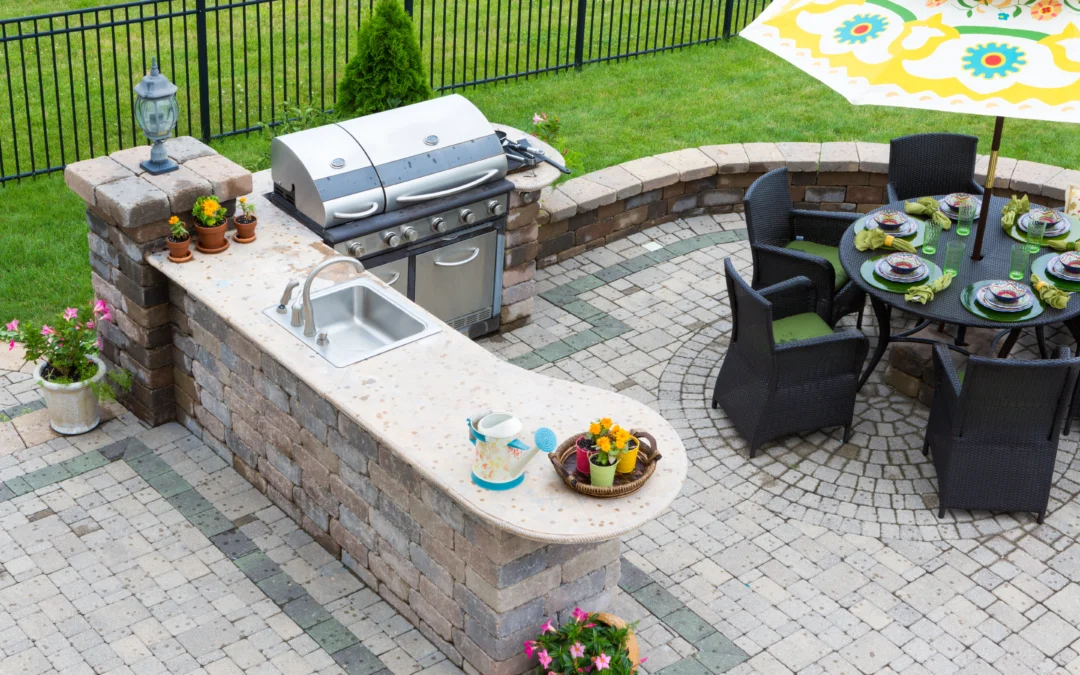
Designing an outdoor space sounds exciting until you realize how easy it is to overspend. The best outdoor kitchen designs are about choosing practical, high-impact elements that make cooking, hosting, and relaxing easier and more enjoyable. If you’re planning your setup, focus on features that deliver everyday value, not just visual appeal.
Start with a Functional Layout
A great outdoor kitchen design begins with flow. Before choosing appliances or finishes, think about how you’ll actually use the space. You’ll want a layout that allows you to prep, cook, and serve without constantly moving back and forth.
The most effective setups mimic an indoor kitchen’s “work triangle,” keeping the grill, prep space, and storage within easy reach. Even in smaller yards, a simple L-shape or straight-line layout can be highly functional if it minimizes steps and keeps everything accessible.
Prioritizing layout first also prevents overcrowding. Many homeowners try to fit too much into their outdoor kitchen, which can make the space feel cramped instead of inviting.
Invest in a High-Quality Grill
If there’s one feature you’ll use more than anything else, it’s the grill. This is not the place to cut corners. A durable, high-performance grill becomes the centerpiece of your outdoor kitchen design and determines how enjoyable cooking outdoors really is.
Look for materials like stainless steel that can withstand weather and frequent use. Consider size based on how often you entertain. Too small can be limiting, but too large can be unnecessary for everyday meals.
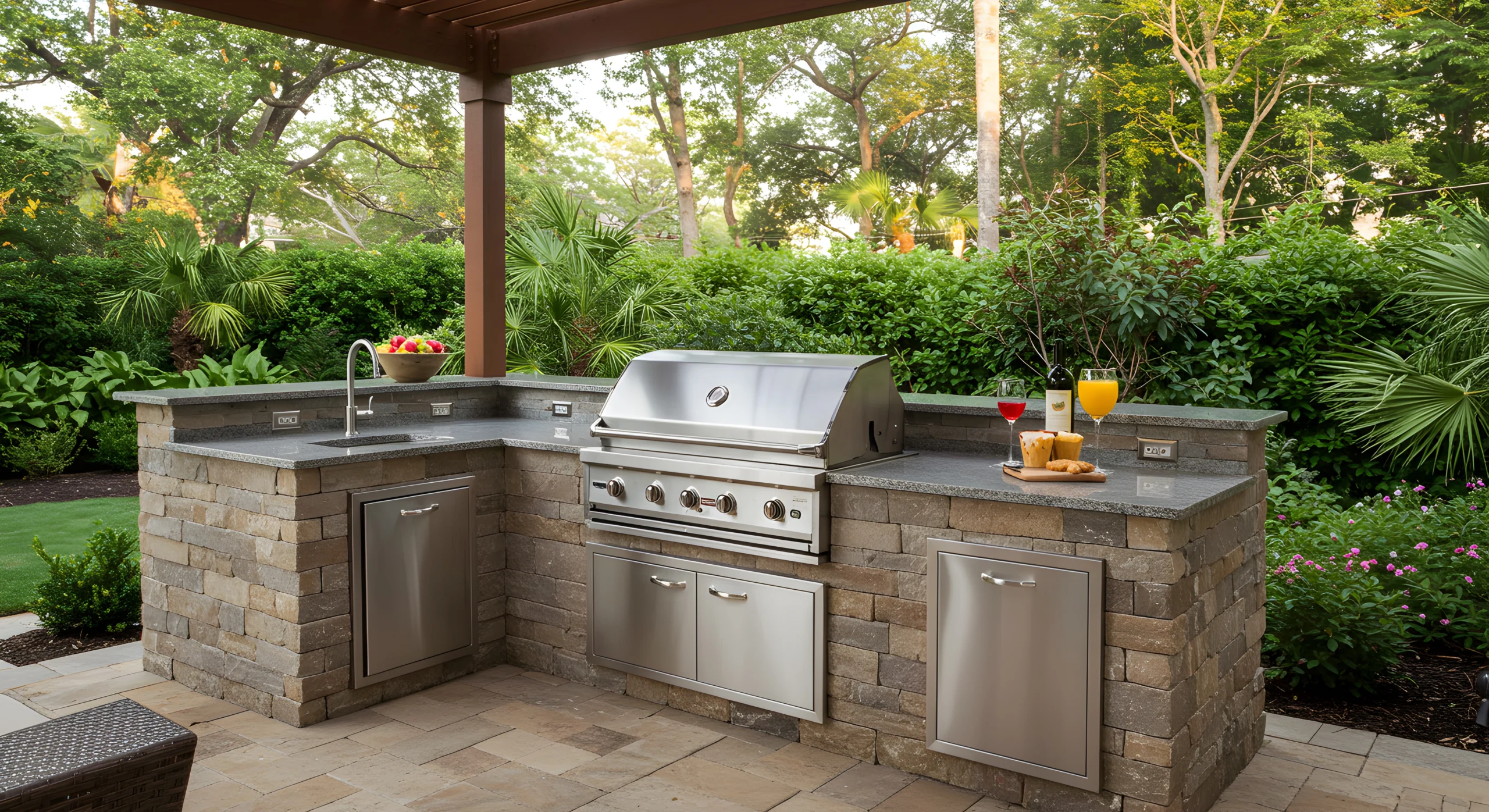
Most importantly, choose a grill that matches your cooking style. Whether you prefer gas for convenience or charcoal for flavor, this is the feature you’ll rely on the most.
Don’t Skip Counter Space
One of the most overlooked yet essential features is ample counter space. Without it, even the most beautiful outdoor kitchen design becomes frustrating to use.
Counters give you room to prep ingredients, plate food, and set down utensils without juggling multiple tasks at once. They also make hosting easier, allowing guests to gather without crowding the cooking area.
Durable materials like granite, concrete, or weather-resistant composites hold up well outdoors and maintain their appearance over time. The key is to build more surface area than you think you’ll need.
Add Smart Storage Solutions
Outdoor kitchens often fall short in storage, leading to frequent trips inside. Incorporating built-in cabinets or drawers keeps tools, utensils, and supplies within arm’s reach.
Weatherproof storage is especially important. Sealed cabinetry protects against moisture, pests, and debris, ensuring everything stays clean and ready to use. This small addition can make a big difference in how convenient your space feels day to day.
A well-planned outdoor kitchen design should function independently from your indoor kitchen as much as possible.
Include Comfortable Seating and Dining Space
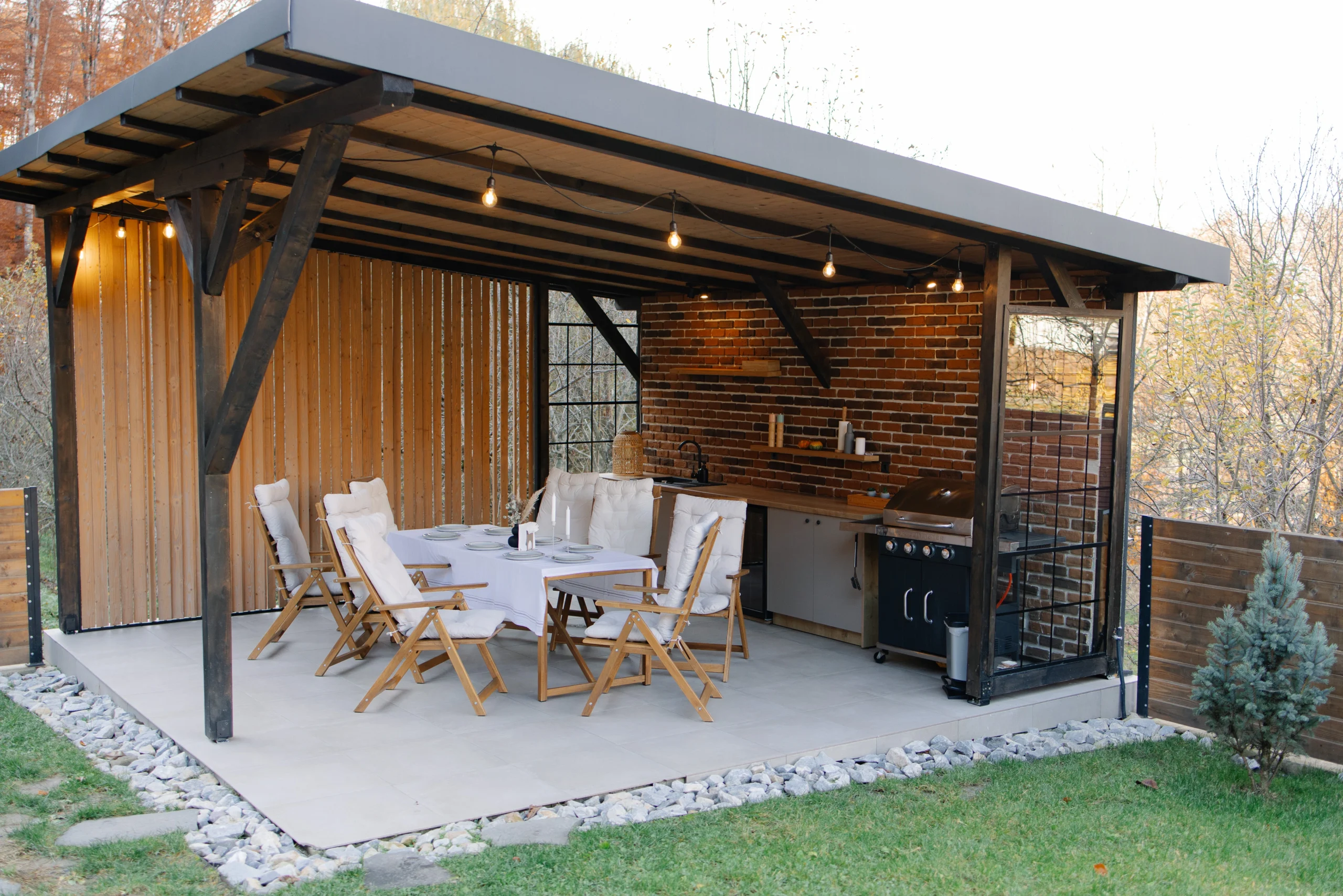
An outdoor kitchen isn’t only for cooking—it’s for gathering. Comfortable seating turns your space into a true extension of your home.
Whether it’s bar seating along a counter or a nearby dining table, providing seating encourages longer, more relaxed gatherings. It also allows the cook to remain part of the conversation rather than being isolated.
Shade elements like pergolas or umbrellas can make seating areas usable even during hot afternoons, increasing how often you’ll actually use the space.
Consider Lighting for Evening Use
Lighting is one of the most underrated features in outdoor kitchen design. Without it, your space becomes unusable once the sun goes down.
Task lighting near the grill and prep areas ensures you can cook safely, while ambient lighting creates a welcoming atmosphere for guests. Simple additions like string lights, under-counter lighting, or pathway lights can dramatically extend how often you enjoy your outdoor kitchen.
Good lighting improves visibility and enhances the entire experience.
Focus on What You’ll Use Most
It’s easy to get caught up in luxury add-ons like pizza ovens, wine fridges, or elaborate fire features. While these can be appealing, they’re not always necessary.
Instead, build your outdoor kitchen design around how you actually live. If you love hosting large groups, prioritize seating and serving space. If you cook often, invest in better appliances and prep areas.
To get the best results, consider hiring a professional. They can help you create beautiful, functional spaces.
The best outdoor kitchens aren’t the most expensive—they’re the ones that get used regularly. By focusing on practical, well-designed features, you’ll create a space that feels effortless, functional, and enjoyable for years to come.