

A detached or two-story garage can do much more than store cars. It can become an income-generating apartment, a home gym, a workshop, guest space, or a place for multi-generational living. While solving storage needs, it also adds flexibility and value to your property.
Detached and two-story garages give more options than single-story attached garages. They let you add square footage without shrinking your yard or changing the look of your home. In this guide, you’ll learn how to decide if a detached or two-story garage works for you, how to plan and design it, and how to get the most value from your investment.
Why Detached and Two-Story Garages Are Popular
Detached and two-story garages are growing in popularity. They add property value because the extra space is useful for many purposes. In some areas, the second story can become a rental unit, creating extra income. Detached garages let you do noisy or messy activities without disturbing the house, like woodworking, music practice, or exercise.
The second story can serve as an ADU, guest suite, home office, or storage space. These garages also prepare your home for future needs, such as teen independence or caring for older family members. With detached structures, you can get creative with rooflines and architecture. Essentially, these are more than garages—they are flexible spaces that can grow with your family and lifestyle.
Detached vs. Attached: Which Works Best?
Choosing between a detached and attached garage depends on space, lifestyle, and budget. Detached garages work well when you have enough yard space, want separation from the main house, or face zoning or HOA restrictions. Attached garages are convenient in cold or wet climates, safer from theft, and usually cost 10–15% less.
A hybrid approach, like a covered walkway, can combine the benefits of both.
Think about how you use your garage daily. Do you carry groceries in bad weather? How important is direct access from the house? These small details help guide the choice.
The Two-Story Advantage
Adding a second story maximizes space without using more yard. It is usually cheaper than expanding outward because the foundation and roof are already in place. The upper floor can be a rental unit, home office, guest room, gym, or storage area. Even if you don’t finish it immediately, framing it during initial construction costs less than building later.
For example, a 400-square-foot single-story garage may cost $40,000–$60,000. Adding a finished second story might cost $70,000–$100,000 but gives double the usable space.
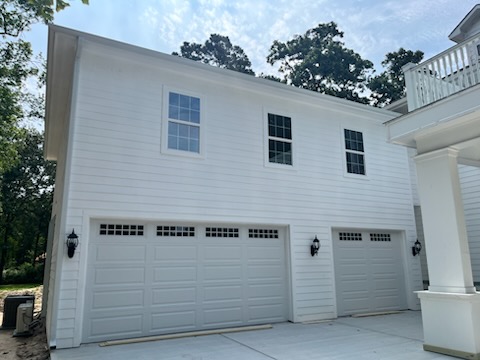
According to Remodeling Magazine, well-planned garage and accessory structure upgrades can improve functionality and resale value.
Planning and Zoning
Research zoning and regulations before designing your garage. Detached garages may face stricter setbacks. Two-story garages may trigger height limits or require variances. ADU rules affect size, parking, and occupancy. HOA approval may be required.
Check for easements and underground utilities. Talk to your local planning office and get a property survey before hiring a designer. Planning early prevents wasted time and money.
Design Considerations
Garage design should balance parking, storage, and future uses. Standard vehicle bays are 12 by 22 feet, but deeper bays can store more. Decide on single, tandem, or side-by-side doors. Ceiling heights should be 8–9 feet for vehicles and 8–10 feet for livable space upstairs.
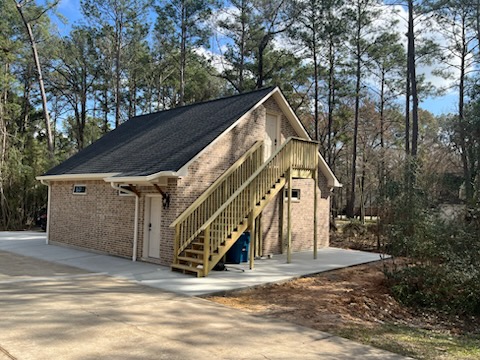
Plan stairs and entrances carefully, especially for rental or ADU purposes.
Adding rough plumbing, electrical, and insulation now makes finishing the second story later much easier. Flexibility is key.
Systems and Infrastructure
Two-story garages need strong foundations to handle the extra load. Electrical systems should support car charging, workshop tools, and HVAC, with room for future upgrades. Mini-split HVAC units can heat or cool the upper floor.
Plumbing rough-ins for a future bathroom or kitchen cost much less during initial construction. Proper insulation and soundproofing improve comfort and efficiency. Installing these systems upfront saves money later.
Finishing Options
You can finish your garage at many levels. A basic shell with an unfinished second story costs $40,000–$60,000 and serves as storage. Adding walls, electricity, and heating for a workshop may cost $60,000–$80,000.
A guest suite or office with flooring, bathroom, and kitchenette ranges from $80,000–$120,000. A high-end ADU with kitchen, bathroom, and custom finishes can exceed $120,000–$180,000.
You can also build the structure now and finish later. Finished ADUs in strong rental markets can generate income within 5–10 years. Even without rentals, property value typically rises by 60–80% of construction cost.
Costs and Financing
Costs vary by region, site, finishes, and utilities. Basic detached garages run $50–$80 per square foot. Two-story garages with unfinished upper floors cost $60–$90 per square foot. Finished living space upstairs costs $120–$180 per square foot.
Financing options include HELOCs, home equity loans, construction loans, or cash-out refinancing. Don’t forget hidden costs like utilities, driveway, landscaping, and permits, which can add 10–15% to your budget.
Maximizing Space
Even large garages need organization. Use vertical storage, wall racks, overhead platforms, and pegboards. Built-in workbenches and cabinets make the space more useful.
Consider lifts to park more cars. Proper lighting and insulated doors improve usability. Plan storage zones for tools, sports equipment, and seasonal items to avoid clutter.
Timeline and Construction
Expect 2–4 months for planning and permits, 3–6 weeks for foundation and framing, 4–8 weeks for the exterior, and 4–12 weeks for interior finishing. Total time is usually 4–9 months. Weather, permits, and contractor schedules can extend the timeline. Coordinate driveway, landscaping, and utilities with construction to avoid doing the same work twice.
Transform Your Property
Detached and two-story garages are investments that add value, utility, and flexibility. Research zoning early, build in rough-ins and structural capacity, and consider a phased approach to stay within budget. Two-story construction adds significant space for relatively little extra cost.
Think about long-term use, rental potential, and future life changes. Start by consulting two or three experienced contractors, getting a property survey, visiting your planning office, and touring completed projects. With so many options to choose from, speaking to a professional to expand your idea of what’s possible is essential.